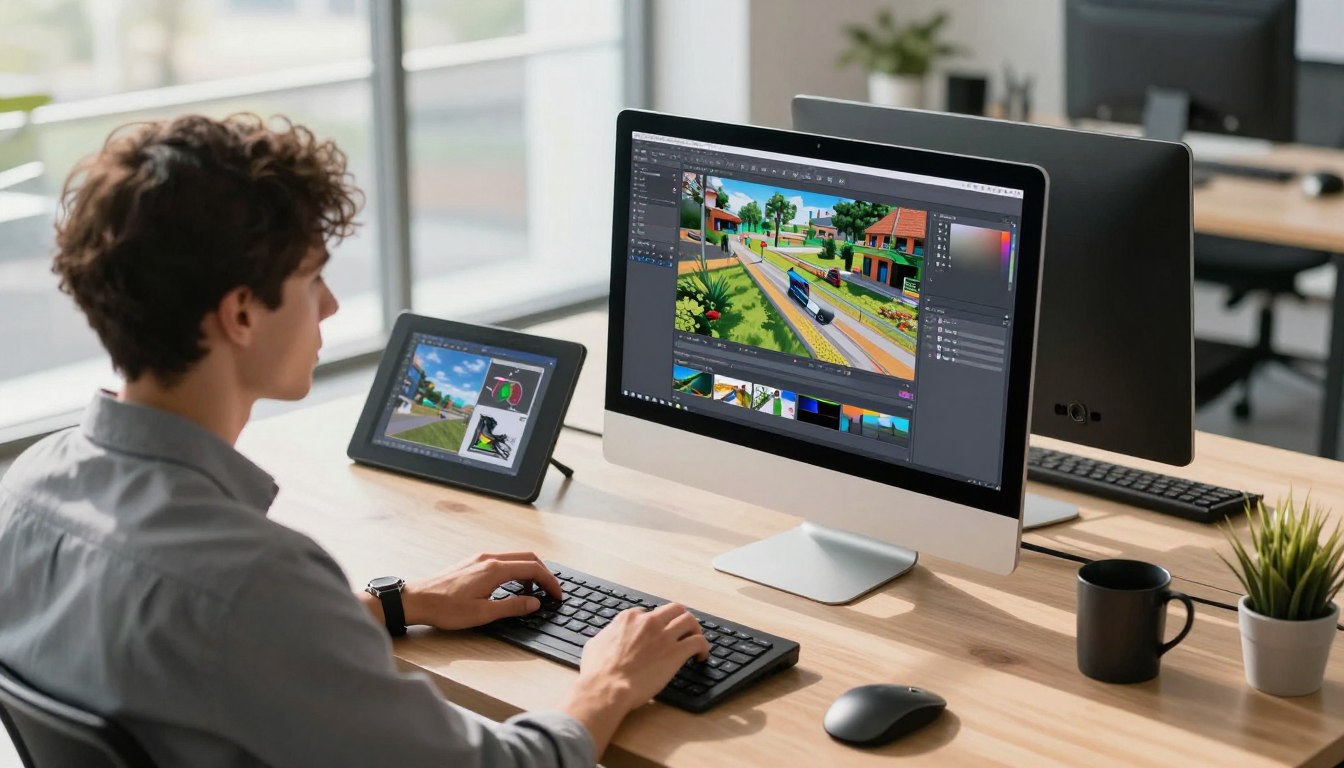
Ever wondered why some workstations zip through tasks in seconds, while yours lags? Many creators face long waits that suck the life out of their projects. But, with today’s tools, you can change that.
Fast results depend on how you set up your tools and hardware. Using advanced engines like Cycles X can cut down wait times a lot. Follow these professional guidelines to make your workflow faster and hit that 10-second goal every time.
Optimizing your system is more than just having the right hardware. It’s about smart configuration. Whether you’re looking for tips on ai porn speed or general rendering, focus on being efficient. Let’s dive into how you can boost your output and cut out delays for good.
Key Takeaways
- Utilize Cycles X to maximize your rendering efficiency.
- Balance your hardware settings to prevent common bottlenecks.
- Streamline your production pipeline to save valuable time.
- Focus on software optimization to achieve consistent 10-second results.
- Eliminate unnecessary background processes that drain system resources.
Understanding the Mechanics of AI Latency
To improve your render speeds, you need to understand the link between hardware and software latency. If your system can’t make images fast, it’s likely because of a mismatch. This mismatch happens when your hardware can’t keep up with the task’s demands.
“Efficiency is doing things right; effectiveness is doing the right things.”
Getting to know these mechanics is key to figuring out why your system might not be doing well. By spotting the bottlenecks, you can tweak your workflow to do better.
The Role of GPU VRAM in Generation Speed
Your GPU VRAM is where your AI models do their work. When you start a render, the model needs to load its data into this memory. This keeps the process fast and smooth.
If your VRAM is too small, your system will use slower RAM or disk swapping. This makes things much slower, leading to noticeable stuttering or crashes.
How Model Size Impacts Processing Time
The size of your model affects how hard your hardware has to work. Bigger models need more time to process, which means longer latency.
Choosing the right model size is crucial. Big models have better detail but take longer to render. You need to find a balance that works for your hardware.
Essential Free AI Porn Speed Tips for Faster Workflows
Boost your productivity with these proven techniques for faster AI image creation. Many users face long wait times. But, using free ai porn speed tips can change your daily output. By improving your technical approach, your hardware works smarter, not harder.
Leveraging Lightweight Checkpoints for Rapid Output
The model checkpoint you choose greatly affects your system’s speed. Larger models need more VRAM, slowing down mid-range hardware. Switching to lightweight or pruned checkpoints makes your GPU work faster without losing quality.
These smaller files are made for speed and efficiency. They’re key for high-volume workflows. Using these models cuts down the time to generate each frame. This is a top free ai porn speed tip for those on a tight schedule.
Optimizing Sampling Steps for Efficiency
Many think higher sampling steps mean better images. But, most models reach a point where more steps don’t improve much. Going beyond 20 to 30 steps adds time without much detail gain.
It’s important to find your “sweet spot” for a fast workflow. Try lower step counts to see when quality is still good for your needs. The table below shows how changing these settings affects render performance.
| Setting | Low Speed Mode | Balanced Mode | High Quality Mode |
|---|---|---|---|
| Sampling Steps | 15-20 | 25-30 | 40+ |
| Checkpoint Size | Pruned (2GB) | Standard (4GB) | Full (6GB+) |
| Render Time | Fastest | Moderate | Slowest |
By adjusting these settings, you can make these free ai porn speed tips part of your daily routine. Keep an eye on render times to keep your workflow fast. Remember, getting efficient is a constant process of testing and improving.
Hardware Requirements for High-Speed Generation
To build a fast rendering rig, you need more than just power. It’s about finding the right balance in your hardware. This ensures your system works well together, avoiding slowdowns.
Choosing the right parts is crucial. This way, your system stays quick even when doing tough tasks.
Selecting the Right NVIDIA RTX GPU
The graphics card is the heart of your workflow. For AI tasks, NVIDIA RTX series cards are top-notch. They have special Tensor cores for fast image making.
When picking a GPU, focus on VRAM capacity first. More VRAM means you can handle bigger models and higher resolutions. Go for at least 12GB VRAM for smooth work.
Managing System Memory and Cooling for Sustained Performance
Even the best GPU can fail if your system overheats or can’t handle data. Thermal throttling happens when it gets too hot. Make sure your case has good airflow and your fans work well.
System memory, or RAM, is also key. Not enough RAM means your computer slows down. Here are some tips to keep your machine fast:
- Upgrade your RAM: Get at least 32GB to handle tasks and big models.
- Optimize Airflow: Keep your dust filters clean and set up your fans right.
- Monitor Temperatures: Use software to watch your GPU and CPU heat during long renders.
- Stable Power Supply: Use a good power supply unit for steady voltage under heavy loads.
Keeping your system cool and well-stocked prevents damage. Consistency is the key for a pro workflow. With the right care, your machine will always deliver fast results.
Software Optimization and Driver Configuration
Your system’s full potential is often hidden by default settings. These settings slow down your rendering speed. To unlock true optimization, you need to adjust how your software talks to your hardware. This tweak can greatly improve your system’s speed and stability.
Configuring xFormers for Memory Efficiency
Boosting performance is easy with xFormers. This tool cuts down VRAM use during the generation process. With xFormers, your GPU can handle bigger tasks or higher resolutions without crashing.
To get started, make sure your environment variables point to the xFormers installation. Many find this change stops memory issues that slow down rendering. It’s a critical step for those with limited video memory.
Updating CUDA Drivers for Maximum Throughput
Your GPU needs the right drivers to work fast. Keeping your NVIDIA CUDA drivers up to date is key for speed. Old drivers miss out on new features, causing delays.
Checking for updates regularly helps your system use the latest optimization patches. These updates fix bugs and improve performance. A well-kept driver stack is crucial for a top-notch workflow.
| Configuration Type | Primary Benefit | Impact Level |
|---|---|---|
| xFormers Enabled | VRAM Reduction | High |
| Latest CUDA Drivers | Throughput Speed | High |
| System Cache Clear | Latency Reduction | Medium |
Mastering Prompt Engineering for Quick Results
Every word you type into your generation tool costs time. Understanding how your instructions are seen can make visuals faster. Efficiency begins with clear communication with your model.
Using Concise Prompts to Reduce Token Processing
AI models break text into tokens. Long, detailed prompts make the system work harder. This slows down the token processing before the image is made.
To speed up, try these tips for short prompts:
- Focus on essential keywords for subject and style.
- Drop words that don’t affect the image.
- Choose specific, impactful adjectives over long sentences.
- Group related ideas to help the model understand you quicker.
The Impact of Negative Prompts on Render Time
Negative prompts help by removing unwanted parts, but they cost time. Each instruction in your negative prompt field uses more computational resources. A long list of exclusions can slow down your render time.
Strive for a balanced approach to avoid delays. Instead of listing many exclusions, focus on the most critical ones. Streamlining your negative prompts lets your GPU focus on creating the image, not filtering out details.
Cloud-Based Solutions for Instant Renders
When your local hardware can’t keep up, cloud computing steps in. It lets you scale your production by using remote servers. This way, you can overcome your workstation’s limits and still get high-quality output.

Choosing High-Performance GPU Cloud Providers
Finding the right provider is key for a smooth workflow. Look for services with dedicated NVIDIA A100 or H100 instances for top AI performance. RunPod, Lambda Labs, and Vast.ai are top picks for professionals needing on-demand access to high-end hardware.
When picking a service, think about the cost and how easy it is to set up your software. Many providers have pre-made templates for quick setup. This efficiency is crucial when you’re under tight deadlines.
Managing Latency in Remote Desktop Environments
Working remotely can introduce latency issues. To reduce this, use optimized remote desktop protocols like Parsec or Moonlight. These tools are made for smooth, high-frame-rate streams with little delay.
To cut down on perceived latency, make sure your local network is stable and wired. Adjusting your bitrate settings in the remote client also helps keep things responsive. By tweaking these settings, your remote work can feel as smooth as local work.
| Provider | Best For | Latency Management |
|---|---|---|
| RunPod | Scalability | Excellent via Web/SSH |
| Lambda Labs | High-End GPUs | Optimized for Remote |
| Vast.ai | Budget Projects | Variable based on node |
Advanced Techniques for Batch Processing
Scaling your production means more than just doing things one at a time. When you work with lots of images, doing things manually slows you down. Using automated workflows keeps your hardware working, even when you’re not there.
Utilizing Scripting to Automate Generation Queues
Scripting lets you set up complex tasks that run on their own. With Python APIs or command-line tools, you can start hundreds of images at once. This way, your GPU works non-stop.
Keep your prompts in JSON or CSV files for big batches. It makes changing settings easy. Automation keeps your process consistent.
Parallel Processing Strategies for Multiple Renders
Parallel processing means running several versions of your software at once. If your GPU is top-notch, you can work on many images at once. This cuts down the time needed for big projects.
Here’s how manual work compares to automated batch processing:
| Feature | Manual Workflow | Automated Batch |
|---|---|---|
| Input Method | Single Prompt | Scripted Queue |
| GPU Usage | Intermittent | Continuous |
| Scalability | Very Low | High |
| Error Rate | Higher (Human) | Lower (Systematic) |
Using these methods needs knowing your system’s limits. Watch your VRAM to avoid crashes. By optimizing your queue management, you turn your workstation into a powerhouse.
Troubleshooting Common Bottlenecks
Even the most powerful hardware can struggle if hidden issues disrupt your workflow. When your render times suddenly spike, you are likely dealing with a system bottleneck that increases latency. Identifying these problems early helps you maintain a smooth and productive creative process.
Identifying Background Processes Slowing Down Your GPU
Your GPU is a shared resource, and other applications often compete for its power. Web browsers, video editing software, or even background system updates can consume valuable VRAM. This competition creates unnecessary latency that slows down your generation speed.
To find these culprits, open your system monitor while your generation software is idle. Look for processes with high GPU usage percentages. You should consider closing these programs before starting a heavy render to ensure your hardware focuses entirely on the task at hand.
Resolving Memory Leaks in Generation Software
Memory leaks occur when software fails to release VRAM after completing a task. Over time, this causes your system to become sluggish or crash entirely. If you notice your generation speed dropping after several hours of use, a leak is likely the cause.
You can often resolve these issues by following these simple steps:
- Restart your generation software periodically to clear the VRAM cache.
- Check for software updates that specifically address memory management bugs.
- Monitor your VRAM usage to see if it climbs steadily without returning to a baseline.
- Disable unnecessary plugins that might be holding onto memory resources.
By keeping a close eye on these factors, you minimize latency and keep your workflow running at top speed. Consistent maintenance is the secret to achieving those fast, reliable renders every single time you sit down to create.
Fine-Tuning Your Workflow for Consistency
To get consistent render speeds, you need more than just fast hardware. You also need a strict workflow. By focusing on optimization, you can avoid slow performance. A well-organized setup helps you meet your 10-second goal every time.

Establishing a Standardized Preset Library
Creating a standardized library of presets is key to speed. It saves time by avoiding manual adjustments and reduces errors. This way, you can focus on your creative work.
Organize your presets by model, resolution, and sampling method. Having a solid baseline lets you switch between settings quickly. This boosts your productivity and lets you concentrate on your art.
Monitoring Render Times to Track Improvements
Measuring your render times is crucial for improvement. Keeping a log of your render times shows which changes work. This data helps you understand how your hardware performs under different loads.
Use spreadsheets or software logs to track your results. If speed drops, compare your current data with past results to find the issue. This cycle of testing and refining is essential for ongoing optimization.
| Workflow Metric | Unoptimized State | Optimized State |
|---|---|---|
| Preset Selection | Manual Adjustment | Saved Template |
| Render Latency | Variable (15-30s) | Stable (8-10s) |
| Error Frequency | High | Minimal |
| Performance Tracking | None | Automated Logs |
Conclusion
To get 10-second renders, you need the right hardware, software, and workflow. Now, you have the tools to make your creative work faster and more efficient.
Keeping your NVIDIA RTX hardware in top shape is key. Regular updates to your CUDA drivers help your machine handle tough tasks smoothly. This effort makes every project you do better.
Think of your setup as a system that gets better with time. Watching your render times helps you find ways to make them faster. Even small tweaks can make a big difference in speed.
Use these tips every day to see quick improvements. Being able to make high-quality content fast will make your work stand out. Start improving your workflow today to reach your creative peak.
FAQ
How can I consistently achieve a 10-second render time for my projects?
To hit the 10-second mark, use modern rendering engines like Cycles X. Make sure your hardware and software are in sync. Streamline your production and remove unnecessary steps to avoid delays.
High-efficiency optimization techniques are key. They help you keep up the fast pace without losing detail.
What are the primary causes of latency during the generation process?
System latency is often due to VRAM capacity and model complexity. If your hardware can’t hold the model and frame at once, it swaps data to slower RAM. This causes big delays.
Understanding these mechanics helps you figure out if your system is limited by hardware or software.
What are the best free ai porn speed tips for maximizing output efficiency?
Effective tips include finding the right balance between sampling steps and model checkpoints. Using distilled models like SDXL Turbo or LCM can help. This way, you get high-quality results with fewer steps.
By balancing these settings, you keep render times under your target while maintaining quality.
Which hardware is most critical for high-speed AI generation?
A powerful NVIDIA RTX GPU is crucial for modern rendering. These cards have Tensor Cores for AI tasks. Also, manage your system’s heat; overheating slows down your GPU.
How do software-side optimizations like xFormers improve performance?
Tools like xFormers increase memory efficiency, letting your GPU work better. Keeping NVIDIA CUDA drivers updated also helps. Proper software optimization is key to a fast workflow.
Does the length of my prompt affect how fast a frame renders?
Yes, prompt engineering impacts computational load. Short prompts mean less data for the system to process. This speeds up the generation phase.
Mastering concise prompts and avoiding keyword stuffing ensures quick processing.
When should I consider using cloud-based GPU solutions?
Cloud solutions from RunPod or Lambda Labs are great when your local hardware can’t keep up. They offer access to top-grade GPUs for fast renders. But, manage connection latency for a smooth workflow.
How can I manage large volumes of renders more effectively?
Batch processing and automation are key for high output volumes. Use Python scripting or built-in queue managers in software like Automatic1111 or ComfyUI. This lets you render multiple frames at once, using your GPU fully.
What should I do if my render speeds suddenly drop?
Sudden drops in speed are often due to background processes or memory leaks. Use tools like Windows Task Manager or NVIDIA System Management Interface (nvidia-smi) to find resource hogs. Restarting your environment can also fix memory issues and boost performance.
How do I maintain a consistent workflow over the long term?
Consistency comes from using a standard library of presets and checkpoints. Monitor your performance and render times to see what works. This data-driven approach helps you hit the 10-second target every time.