
Ever thought if the digital fantasies you explore are truly endless? Or are you just starting to see what modern tech can do? As synthetic media grows, many users find themselves lost in a world of adult innovation.
This free ai porn glossary is your key to understanding the tech and creativity behind these sites. Knowing these terms lets you shape your own experiences with more ease and confidence.
These digital worlds offer a judgment-free space for exploring your interests in a new way. It’s crucial to know the specific words used in this field for a better experience. Whether you’re new or experienced, this guide opens up the possibilities of your creative time.
Key Takeaways
- Learn the foundational language required to navigate synthetic adult media platforms effectively.
- Discover how to utilize these tools to create a personalized and judgment-free environment.
- Understand the technical nuances that distinguish high-quality generated content from basic outputs.
- Enhance your creative control by mastering the terminology used by top-tier developers.
- Gain confidence in exploring your unique fantasies through a structured and informative approach.
Understanding the Basics of AI-Generated Content
To get the most out of an ai porn glossary, you must grasp how these models work. The shift from traditional photos to synthetic media is huge. It lets creators make specific images that were once impossible.
Defining Artificial Intelligence in Adult Media
AI in this field is like a digital architect. It creates detailed images based on what you want. These images are not just static; they can change to fit your needs.
This tech offers personalization that old media can’t. You’re not stuck with what’s already out there. You get to create your own unique visual world.
How AI Models Learn from Datasets
AI’s smarts come from huge datasets. It looks at millions of images to learn about patterns and human shapes. This learning lets it make new images or stylized versions of reality.
After learning these patterns, the model can make new content. When you give it a prompt, it uses what it learned to create the best image. Knowing how to use this ai porn glossary helps you get the best results.
Navigating Your Free AI Porn Glossary
Learning the right words is key to enjoying digital content fully. A free ai porn glossary lets you search better. This means you spend less time looking for what you want.
Why Terminology Matters for Your Search
Knowing the right terminology is crucial. Without it, finding what you want can be hard. A good ai porn glossary guides you past bad results to the good stuff.
“The limits of my language mean the limits of my world.”
These tools are a low-risk alternative to real-life relationships. They let you control what you see, without the worry of others’ feelings. Learning the right terminology means you get a personalized experience every time.
Categorizing Different Types of AI Content
To find what you like, you need to know how to sort AI content. Most sites have clear differences between realistic and stylized images. Knowing these helps you switch between looks easily.
Look for tags on lighting, camera angles, and how characters are shown. Sorting by these helps find the perfect AI content for you. A detailed ai porn glossary makes exploring AI content efficient and fun.
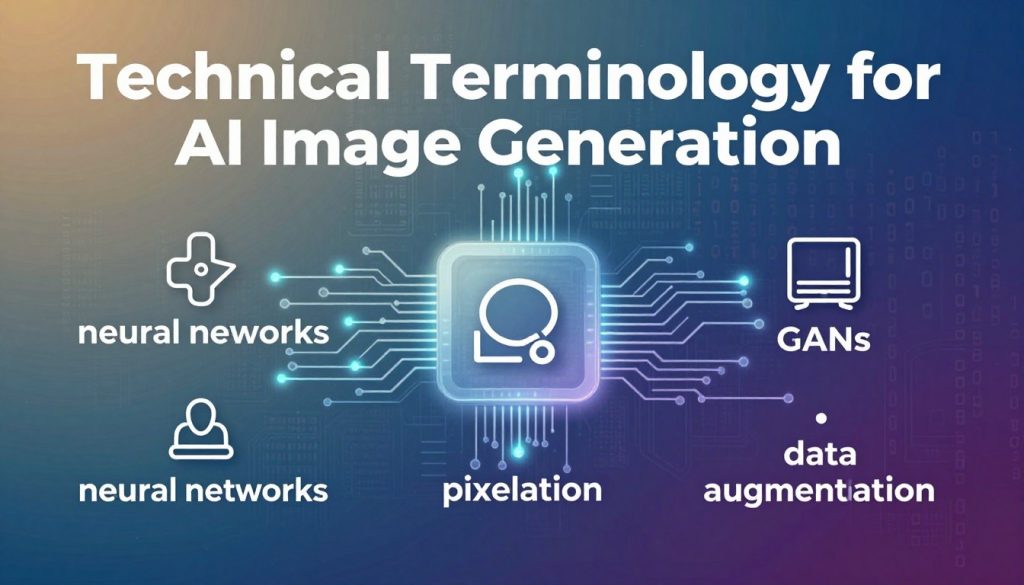
Technical Terminology for AI Image Generation
Learning about AI models changes how you use tools like OurDreamAI. Knowing technical terminology lets you get better results. It helps you make detailed, custom images.
Understanding Diffusion Models and Latent Space
Diffusion models are key in making images. They start with noise and clean it up to show a picture. This happens in a space called latent space.
Latent space is like a map of all images. When you give a prompt, the AI finds the right spot in this space. Knowing this terminology helps you see how the AI gets your ideas.
Defining Checkpoints and LoRA Models
To keep your images looking the same, you need special files. They help build your image:
- Checkpoints: These are big models that set the AI’s style.
- LoRA Models: These are smaller files that add details to the AI’s style.
Using these tools right keeps your images looking the same. It’s key for improving your terminology and work.
The Role of Sampling Methods and Steps
The quality of your image depends on how the AI works. Sampling methods are the math that helps the AI create your image. Try different ones to find the best.
Also, how many steps the AI takes affects the image’s detail. More steps mean more detail, but it takes longer. Knowing this terminology helps you get the best balance of speed and quality.
Decoding Video Synthesis and Animation Terms
Learning the language of AI video synthesis opens up new creative doors. As you dive into these advanced tools, you’ll come across specific terminology. This terminology helps your digital characters move and speak in a realistic way. Understanding these terms lets you fix issues and improve your work more accurately.
Key Concepts in AI Video Generation
Platforms like SoulGen have changed how we make automated media. They now offer features like lip-sync video generation. This makes sure your character’s speech matches the text you provide. They also handle different languages and can create audio based on your prompts.
Frame Interpolation and Temporal Consistency
For short videos, you want the movement to look smooth, not jerky. Frame interpolation helps by creating extra frames between images. This keeps the animation smooth and prevents unexpected changes in your character’s appearance.
Understanding Motion Vectors and Keyframes
To control your animation, you need to know how motion is mapped. Motion vectors guide the AI on where and how fast pixels should move. Keyframes are the main points that set the start and end of an action.
| Feature | Function | Benefit |
|---|---|---|
| Lip-Sync | Audio-to-mouth alignment | Realistic speech |
| Frame Interpolation | Adding intermediate frames | Fluid motion |
| Motion Vectors | Directional pixel tracking | Controlled movement |
| Keyframes | Defining action anchors | Structural stability |
Using this terminology in your work can greatly enhance your AI-generated projects. Regular practice with these settings will lead to professional-quality results in your video synthesis projects.
Identifying Style and Aesthetic Modifiers
Learning the definitions of style and aesthetic tags can change your AI-generated images. These tags connect a basic prompt to a professional-looking result. By knowing these terms, you can control the look and feel of your media.
Using Descriptive Tags for Visual Quality
Descriptive tags are key for the quality of your output. Specific definitions tell the AI model to focus on high resolution and sharp details. Tags like “masterpiece,” “highly detailed,” or “8k resolution” mean you want a polished image.
Using these tags right prevents blurry or low-quality images. Try different tags to see how they affect your image’s texture and clarity. Using them consistently improves your results fast.
Applying Artistic Styles and Lighting Effects
You can change the mood of your scene with artistic style definitions. Whether you want a realistic photo or a digital painting, the right keywords guide the model. You can add effects to change the image’s atmosphere:
- Lighting: Use terms like “cinematic lighting,” “golden hour,” or “soft studio light” for depth.
- Artistic Styles: Add “cyberpunk,” “watercolor,” or “hyper-realistic” for the aesthetic.
- Color Palettes: Choose “monochrome,” “vibrant colors,” or “muted tones” for visual impact.
Camera Angles and Composition Terminology
Knowing camera definitions lets you frame your subjects like a pro. The camera’s position changes the scene’s story. Use these terms for dynamic, cinematic compositions.
Try these composition techniques to improve your work:
- Wide Shot: Shows the whole scene and subject.
- Close-up: Focuses on details or emotions.
- Depth of Field: Use “bokeh” or “shallow depth of field” to blur the background.
- Low Angle: Makes the subject seem powerful or imposing.
By using these technical definitions, you go from simple images to intentional art. Mix these modifiers to find unique styles that fit your vision. Mastering these definitions unlocks your AI tools’ full potential.
Mastering Prompt Engineering for Better Results
Prompt engineering is key to turning your ideas into digital art. It helps you create detailed scenes from simple ideas. This skill is crucial for making consistent, high-quality media.
Structuring Your Prompts for Maximum Impact
Start your prompts with the main subject. Then add details about the environment, lighting, and style. This clear structure helps the AI understand your request.
“The quality of your output is directly proportional to the clarity and depth of your input instructions.”
Tools like CreatePorn help you build complex scenes with layered prompts. By adding detailed definitions, you guide the model. This makes it easier to achieve your desired outcome.
Using Negative Prompts to Filter Content
Negative prompts are crucial for filtering out unwanted elements. They tell the AI what not to include in the image. This is key for avoiding errors or unwanted details.
- Use negative prompts to exclude blurry textures.
- Specify unwanted colors or lighting styles.
- Filter out distorted limbs or facial features.
By defining what to avoid, you can refine your output. This helps the model focus on what you want. It’s a precise way to control the final image.
Weighting and Emphasis in Prompt Syntax
Understanding prompt syntax lets you control the AI’s focus. Most models use special symbols to adjust keyword importance. This affects how the image is rendered.
For instance, using double parentheses can make a keyword more important. Learning these definitions gives you detailed control. Experimenting with these weights helps you find the perfect balance in your AI projects.
Safety and Ethical Considerations in AI Media
Exploring AI-generated content means knowing the legal and moral rules. It’s key to understand what’s right and safe. This way, your online interactions stay respectful and follow today’s standards.
Recognizing Deepfake Policies and Consent
Creating media with real people without their okay is a big issue. It’s a breach of personal freedom. Many sites have strict deepfake policies to stop misuse of images.
Knowing these definitions helps spot when content is wrong. Make sure the tools you use respect privacy and follow laws about images. It’s crucial to respect others in the AI world.
“True innovation in artificial intelligence must be balanced with a deep commitment to human dignity and the protection of individual rights.”
Understanding Platform Terms of Service
Every website has rules for using their tools. These definitions in the Terms of Service (ToS) tell you what’s okay and what’s not. It’s important to read these to keep your account safe and follow community rules.
The table below shows how different sites handle safety and content creation.
| Policy Area | Standard Practice | User Responsibility |
|---|---|---|
| Consent | Explicit permission required | Verify subject approval |
| Deepfakes | Strict prohibition | Avoid non-consensual imagery |
| Content Moderation | Automated filtering | Follow site guidelines |
| Data Usage | Privacy protection | Review data policies |
By knowing these definitions, you help make the AI world safer. Always choose transparency and ethics in your AI media journey.
Troubleshooting Common AI Generation Issues
When your AI-generated media doesn’t look right, simple fixes can help. Technical glitches are common when using complex models. Learning to spot these issues can greatly improve your results.
Fixing Anatomical Errors and Artifacts
AI generators sometimes make anatomical errors like extra fingers. This happens when the model has trouble with human anatomy. To fix this, add prompts that say “extra fingers” or “deformed hands.”
Improving your prompts helps the model get the body right. If a limb looks wrong, tweak your tags. Consistency is key for realistic human forms.
“The beauty of digital creation lies in the ability to iterate until the vision matches the reality.”
Resolving Blurry or Distorted Outputs
Blurry images or videos often come from sampling settings or too few steps. More steps mean more detail. But too many can overdo it.
Picking the right model is crucial for clear images. Some are better for art, others for realism. If your images are still off, try a higher-quality checkpoint or a LoRA model made for your needs.
Also, make sure your resolution matches the model’s training data. Wrong aspect ratios can cause unwanted artifacts. Match your settings to the model’s strengths for cleaner results.
Conclusion
Understanding AI-generated media is complex. You now know the basics to work better with tools like Stable Diffusion or Midjourney.
By using what you’ve learned, you can turn simple ideas into amazing visuals. How you adjust settings and ask questions affects your results.
It’s also important to use these tools responsibly. Following rules and respecting others’ privacy helps everyone. You help these tools grow by being careful and ethical.
Don’t stop trying new things. This guide is just the beginning of your synthetic media journey. Your creativity will keep growing as you learn more and try new things.
FAQ
Why is an ai porn glossary essential for new users exploring adult-oriented platforms?
An ai porn glossary helps you understand complex terms like those on Civitai or Stable Diffusion. It lets you communicate your desires clearly. This way, your fantasies can be turned into high-quality digital media without the need to try many times.
How do AI models like Stable Diffusion differ from traditional photography or video?
AI models, like Stable Diffusion, don’t need a physical lens or subject. They learn from huge datasets to create new content. Platforms like Leonardo.ai use machine learning to make personalized digital companions that don’t exist in real life.
Why does the specific terminology used in a search matter so much?
Using the right terms ensures the AI understands your request correctly. For example, knowing the difference between hyper-realistic and anime-inspired content helps. This precision makes navigating platforms easier and gives you control over visuals.
What is the difference between a Checkpoint and a LoRA model?
A Checkpoint is the main “brain” that knows styles and shapes. A LoRA is a smaller file that adds specific styles or consistency. Users on Tensor.art often mix these to ensure characters look the same in different scenes.
How do Sampling Methods and Steps affect the final image quality?
Sampling Methods are formulas that refine images from random static to clear pictures. Steps are how many times the AI refines the image. More steps can improve clarity but too many can distort the image. Finding the right balance is crucial for quality results.
What are Frame Interpolation and Temporal Consistency in AI video?
Frame Interpolation makes videos look smooth by adding “in-between” frames. Temporal Consistency keeps details consistent throughout a video. Mastering these concepts is key for realistic movements in adult video clips.
How can I use descriptive tags to influence lighting and artistic style?
Tags act as instructions for the AI’s “camera.” Adding terms like rim lighting or cinematic bokeh controls light. You can also evoke specific styles like oil painting to match your vision.
What is Prompt Engineering and why is it the most critical skill?
Prompt Engineering is the art of structuring text for the AI. By using specific syntax, you guide the AI’s output. This skill, combined with a solid glossary, reduces the number of attempts needed to generate a perfect image.
What are Negative Prompts and how do I use them?
Negative prompts list elements you don’t want to see. On platforms like SeaArt.ai, users include terms like “extra limbs” or “blurry” in the negative prompt box. This ensures the AI avoids common errors and technical artifacts.
What ethical considerations should I keep in mind regarding Deepfakes and Consent?
Every user must respect deepfake policies, which prohibit non-consensual content. Reviewing the Terms of Service (TOS) of platforms like Midjourney or Adobe Firefly is crucial. Respecting consent is essential for a safe AI community.
How do I fix anatomical errors like extra fingers or distorted faces?
Anatomical glitches are common. Adjusting your seed or using Inpainting can help. Also, ensure your LoRA weights aren’t too high to avoid physical distortions.
What should I do if my AI-generated video or image is blurry?
Blurry outputs often result from low sampling steps or incorrect CFG Scale. Increase your resolution settings or use an Upscaler like Topaz Photo AI to add detail and sharpness.